

Pre-Clinical Career Corner
Department of Psychology
Texas State University
Hello! Welcome to the Department of Psychology Pre-Clinical Career Corner!
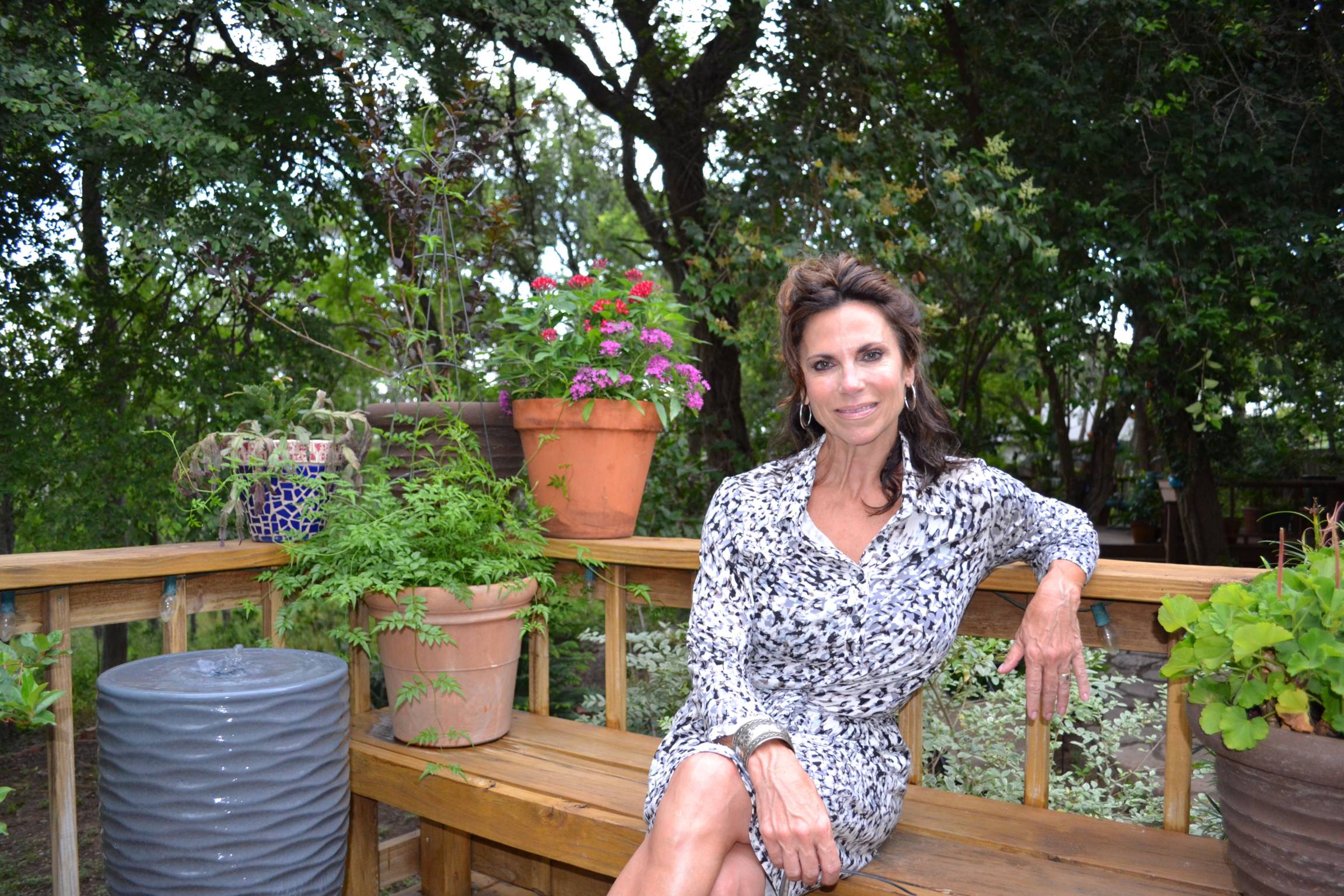
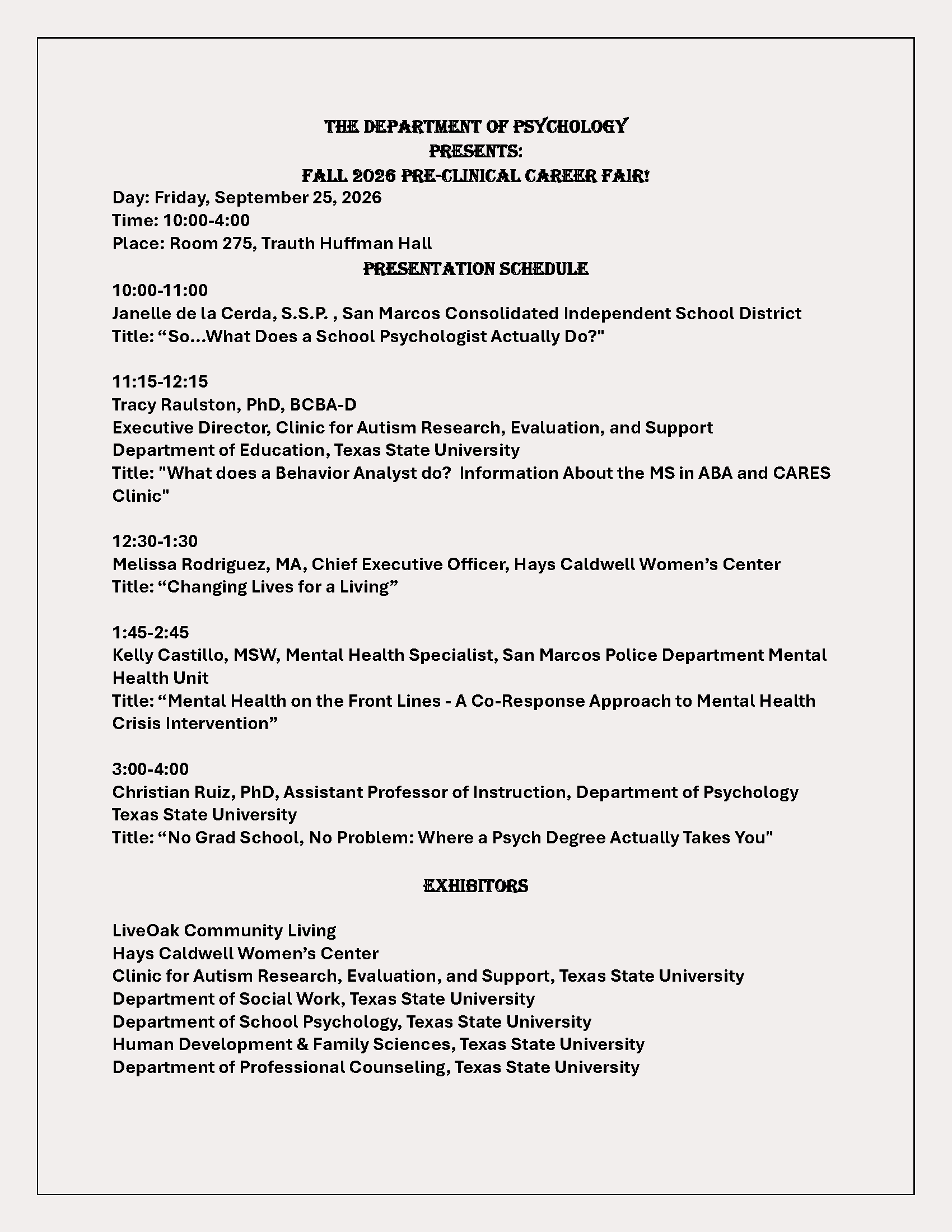
I am Dr. Naomi Coleman Medina, Department of Psychology Pre-Clinical Career Advisor and am happy to welcome you to the Psychology Pre-Clinical Career Corner page. The Clinical Career Corner is for the purpose of providing resources to those of you who are interested in entering a clinical profession. To assist you in deciding how to proceed on your career path, you will find information regarding a variety of clinical roles. I invite you to explore each of the links and I encourage you to check out the Clinical Career Corner often as we will be providing new material over the semester, and also here is where you will learn about upcoming events. In fact, we have some exciting informative opportunities and events for the fall, 2026 semester. So, keep on the lookout! You can also access previously recorded presentations that will add to your knowledge base on some of the clinical careers out there.
Hope to see you at our clinical events over the semester!
Take care,
Naomi Coleman Medina, PhD, LPC-S
Assistant Professor of Instruction
Pre-Clinical Career Advisor
Department of Psychology
Nm1098@txstate.edu
-
Tips for Writing Letters of Recommendation
Planning on attending graduate school? Congrats on your decision to further your education! But, given all that is required, the application process can feel overwhelming. One of the tasks many of you may find somewhat daunting is securing letters of recommendation.
To provide you with a headstart and some insight into the request for recommendation letter process, below are some of our Psych Department faculty’s thoughts and advice regarding letters of recommendation. This list is not exhaustive but will provide a good idea of what to keep in mind prior to requesting letters of recommendation. (And by the way, some faculty members may require you to complete a specific questionnaire that helps them know you better.)
Requesting a letter of recommendation can be scary but don’t be afraid to ask - we faculty consider it an honor to be a part of your journey to grad school. Before you ask, here are some “recommendations” for your recommendation letters:
“I have my students complete a ‘Mock Letter of Reference’. I provide a template. This way they provide the information I need and also a copy of their resume. It helps a lot. I also require 3 weeks heads up.”
“When students ask me for letters of recommendation, I require them to send me their CV and their statement of purpose. I also ask them to let me know how many schools I should expect requests from and if they know how I submit the letters. I do this because I've found sometimes the emails with the requests get sent to spam. I also ask students to give me at least 2 to 3 weeks notice. If they ask for a letter in a shorter time frame than that, I try my best to accommodate them, but given it's usually at crazy times of the semester, I often have to say no.”
“The last-minute requests are rough…the ones that hurt the most are when there's no heads-up at all. When I find out a letter is expected when a deadline is staring at me in the face, I've had to reach out directly to the student to ask for supplemental materials (CV, personal statement drafts, context about the program, etc.) so I can write a strong and personalized letter…IF I don't hear back, I simply don't proceed. Which then means a student is "missing" a letter and probably doesn't know why. “
“Lack of email etiquette and students who aren't sure what they want make it difficult.”
“I'd love it if students were more prepared before they ask. I always ask for a professional looking CV, a list of schools they plan to apply for (with deadlines and submission info), and a draft of their personal statement. I try to highlight parts of their CV and personal statement, if I can.”
“I've turned down folks before who I didn't know well or who didn't ask first…having some idea of what kind of programs they want to apply to and how many is what I would like to see.”
“Being given 3-4 weeks’ notice is smart. “
“I ask for: List of schools and which programs, Resume/vita, Unofficial transcript, Draft of statement of purpose. Items they would like me to stress in the letter”
I ask for at least 2 weeks' notice.”“A month’s notice is even more helpful, especially if the deadline is going to be near the end of the academic semester. I would say that a letter tends to be stronger when I have worked with a student outside of class on a project of some kind (e.g., journal manuscript, poster, etc.). It can be difficult to write a letter solely based on interactions during class, especially if the student doesn’t participate as much as others or there are a lot of students in the class.”
“I usually prefer to write letters for students that I know fairly well, usually because they have worked in my lab… I am willing to write letters for students who I have just had in a class, but in those cases, I like to have them come in and meet with me and talk about their plans and goals for applying so that I can get to know them better.”
“Logistically, I like to know to expect the email request from the schools well in advance (2-4 weeks at least). It is irksome to receive the email request from the school before the student has formerly asked me to be one of their recommenders. (Maybe students don't know that we get notifications as soon as they submit our names with their application, but they should). If the student is applying to many schools, it's nice to have a list of the schools with the program names and due dates (in advance).”
“I have in the past had students fill out a form with questions below and send to me. If I don't know them well, I sometimes like to do a Zoom meeting to get to know them better and ask these questions in the meeting such as: Tell me some basic information about yourself. Remind me when you took my class, how you did in my class, what you wrote your paper(s) about, contact we had outside of class (office hours, etc.). Or if you were involved in research, tell me what projects you helped with, when you were involved in research, and any other details you can provide. What is the recommendation letter for (grad school, scholarship, internship, etc.)? If grad school, what specific programs are you applying or? Or name of scholarship and who it is for. When do you need it by? What activities have you been involved in while in college? Research? Clubs or organizations? Athletics? Other activities? Describe your experiences. Briefly, what are your future goals, plans? Current GPA and GPA in major? Are you a member of the University Honors program? Do you have any special skills…?
“I ask them to give me a spreadsheet with the school (including the address), the program they are applying to, and the deadline date for application. I’ve also started asking them if there is any information they want me to convey in the letter (like that their GRE scores are not indicative of their academic work, etc.)
“I remind them that we do not get the requests for the letters until they submit their application. And I caution them about waiting until the end of November to submit their applications because that often means that we spend our Thanksgiving break completing their recommendations.”
“Students often do not realize that in addition to the letter submission, we are also often asked to complete a standardized questionnaire about them. I’ll get requests from students in my online courses who did well and have really good resumes/statements. But when it comes to that questionnaire, I have to mark it as N/A for most of the items since I haven’t actually interacted with them in the real world.“
“My advice is first for a student to engage with me during class, or over the semester, regularly communicate with me. I am more likely to write a letter for a student if I know them, and if they participated in class. Simply because they excelled in my class is not enough for me to be able to write a strong letter for them. And, students should always formally meet with the professor to request a letter of recommendation prior to submitting the professor’s name to the graduate program to which they are applying. I have declined writing letters of recommendation when the student did not first talk to me before they submitted my name as a recommender. I also need a minimum of 4 weeks, and always ask for a reminder follow-up email.”
“I require: (1) resume/CV, (2) unofficial transcript (screenshots from Catsweb are fine), (3) list of schools and deadlines [and for PhD programs, which faculty they’re applying to work with], and (4) rough draft of their personal statement. I like to get requests at least six weeks ahead of time and I actually appreciate student reminders 1 week and 3 days before deadlines.”
Major takeaways:
Graduate programs will require a transcript, and will be provided proof of your academic success. This means that recommendation letters are not entirely about academic success; they are descriptions of who you are as a person and one who has the traits to succeed in grad school, which means:
Try your best to establish a rapport with your professors. They need to know you to be able to write about you.
Request a meeting with your professor to discuss your request for a recommendation letter prior to your submitting their name as a recommender. Otherwise, you appear presumptuous…and you will probably by missing a letter (or two, or three) by the deadline of your application.
Speaking of deadlines, inform your professor of your deadline for application. Professors live by deadlines.
Provide at least 3-4 weeks prior to your deadline. This means you need to meet with your professor outside of 4 weeks prior to deadline.
Asking for a letter that would have to be written over Thanksgiving Break? Really?
The Department of Psychology faculty member who will be signing your letter of recommendation is placing their name as a representative of Texas State University, and a professor who believes in you. This is quite a responsibility and an act of trust.
We want you to succeed. Help us do that.
-
Fall 2026 Resources/Events
TBA
-
Spring 2026 Resources/Events
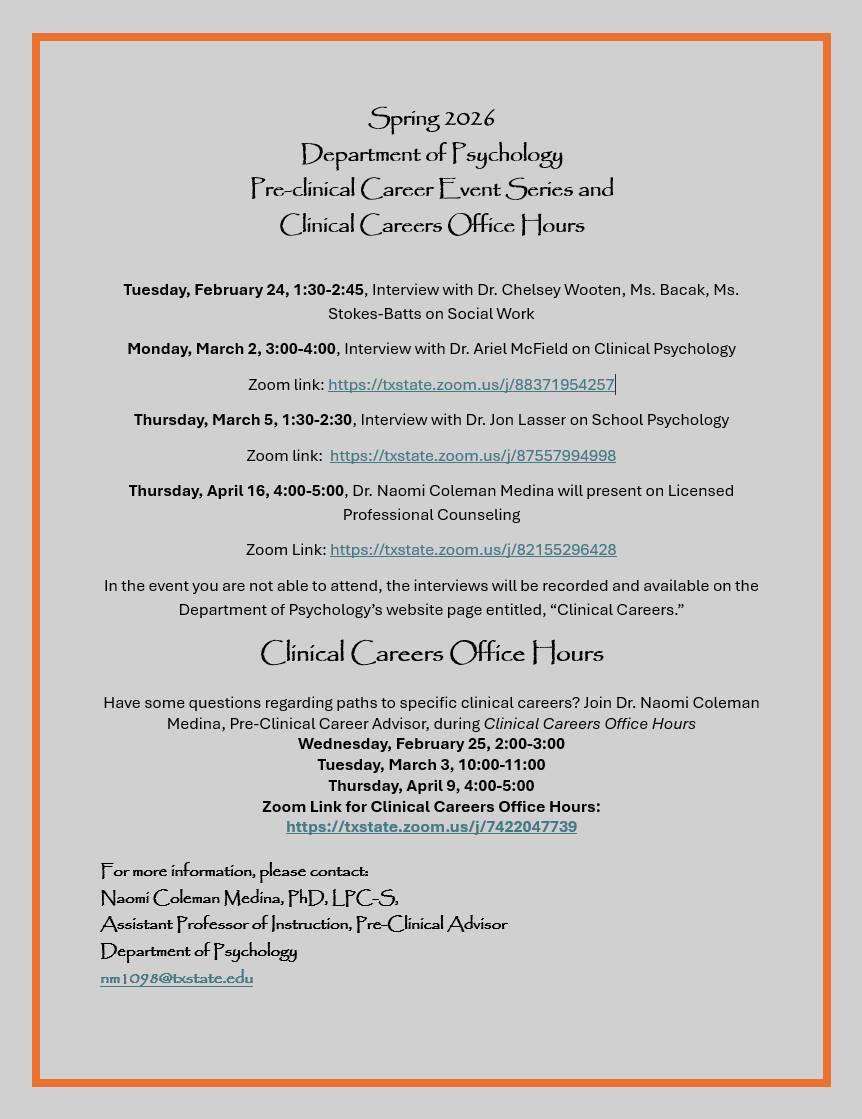
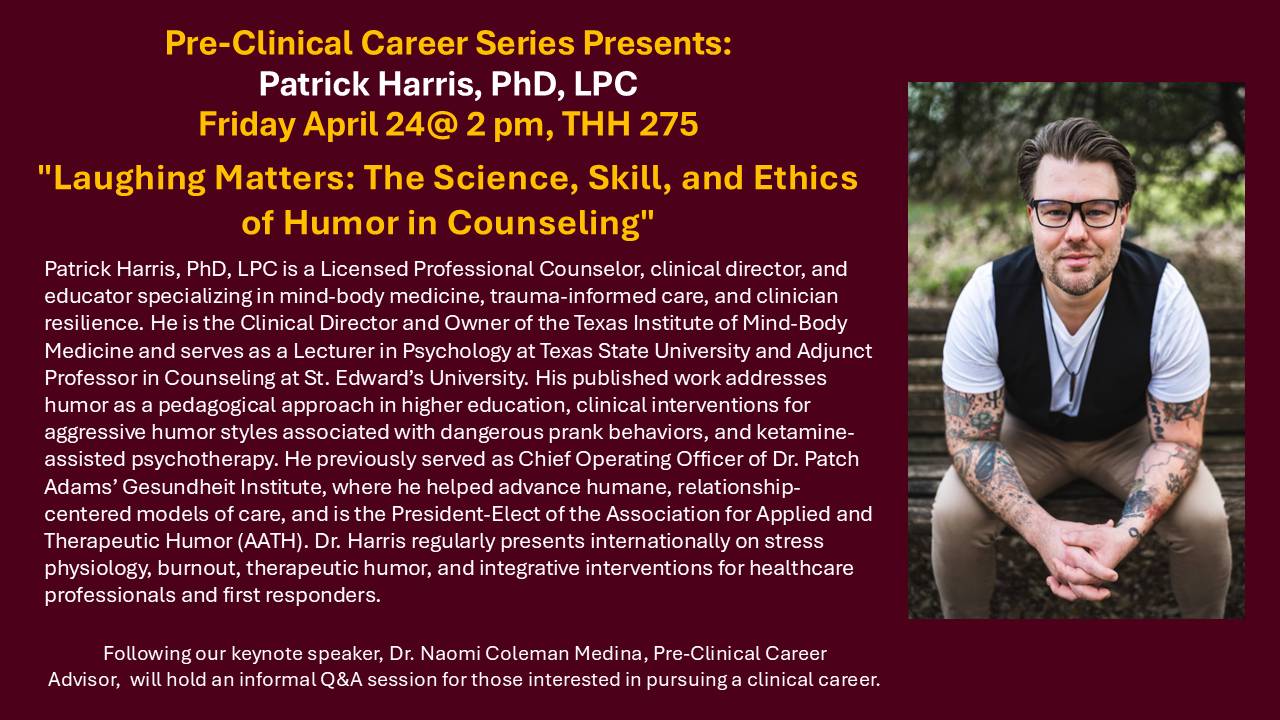
Friday, April 24th, 2PM keynote speaker Dr. Patrick Harris, with a Q&A held by Dr. Naomi Coleman Medina
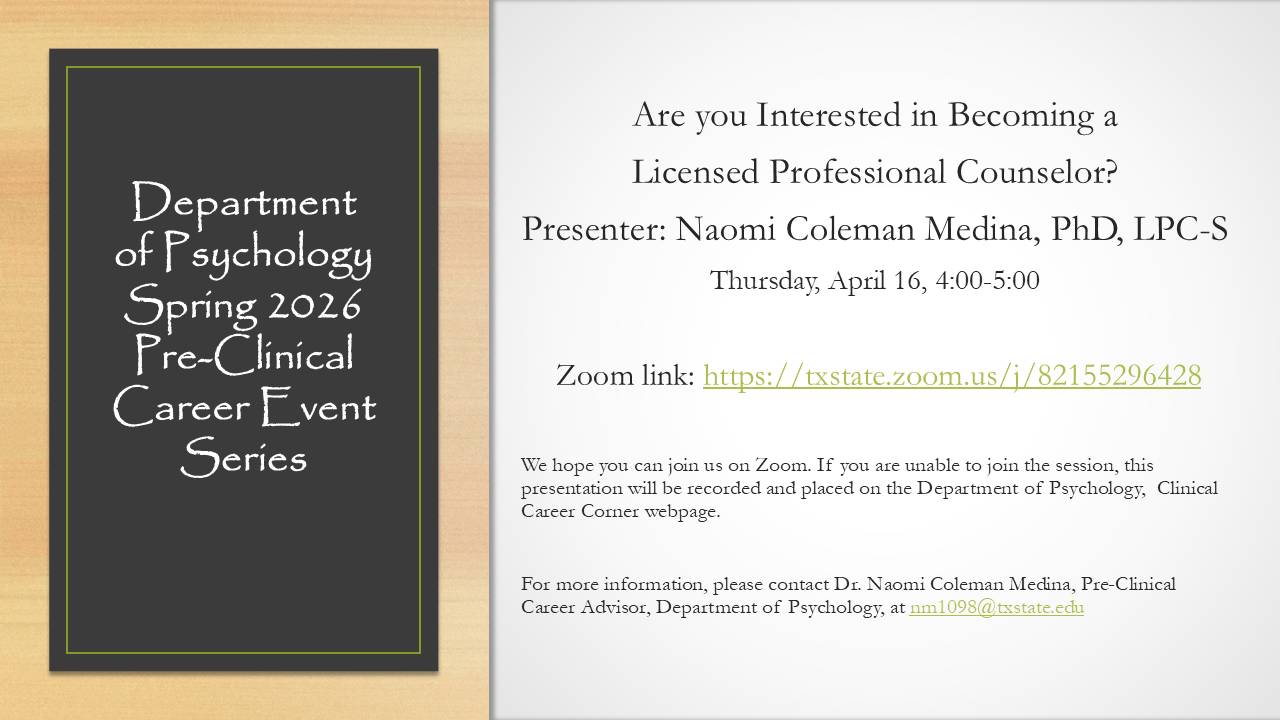
Thursday, April 16th, 4:00-5:00 interview with Dr. Naomi Coleman Medina
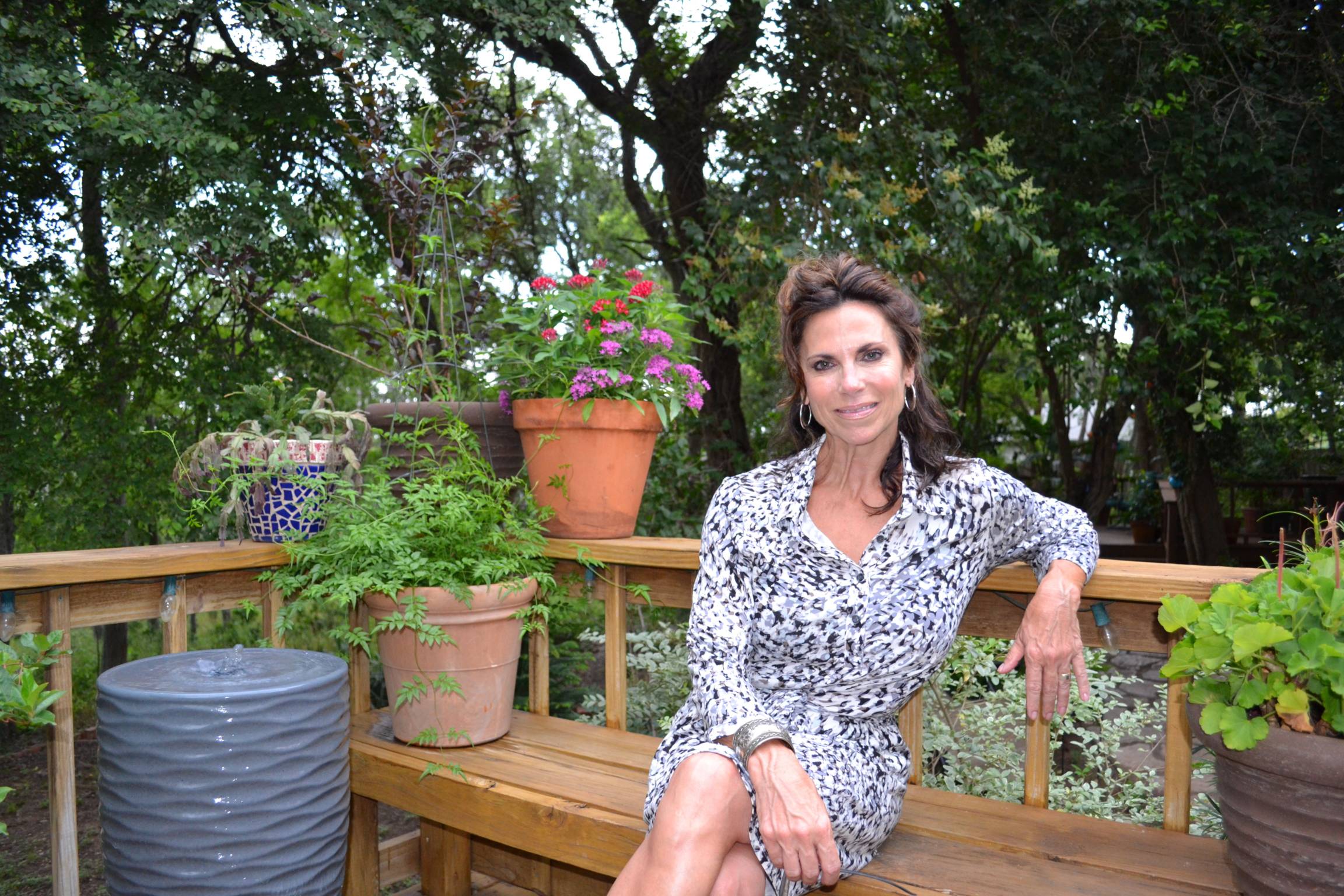
Naomi Coleman Medina, PhD, LPC-S is an Assistant Professor of Instruction in the Department of Psychology at Texas State University. She also serves as the Pre-Clinical Career Advisor for the Department of Psychology, and in this role, assists students in learning about various clinical professions and the paths that will serve them in reaching their clinical career goal. Dr. Medina is also a member of the adjunct faculty in the Department of Counseling at Texas State University and the Department of Counseling, Kinesiology, and Health at Texas A&M San Antonio. Classes she teaches are Forensic Psychology, Social Psychology, Psychopathology, Health Psychology, Basic Skills in Counseling, Counseling Diverse Populations, Advanced Ethics, Assessment, Theories of Counseling, Professional Counseling, and Counseling Diverse Populations. Dr. Medina’s research interests pertain to the natural world and its impact on human flourishing and psychological well-being. She is also a Licensed Professional Counselor Supervisor and owns Metamorphosis, a private counseling practice where she offers nature-based therapeutic interventions and provides Walk Talk therapy. Dr. Medina is also a fitness coach and grows orchids for her therapy.
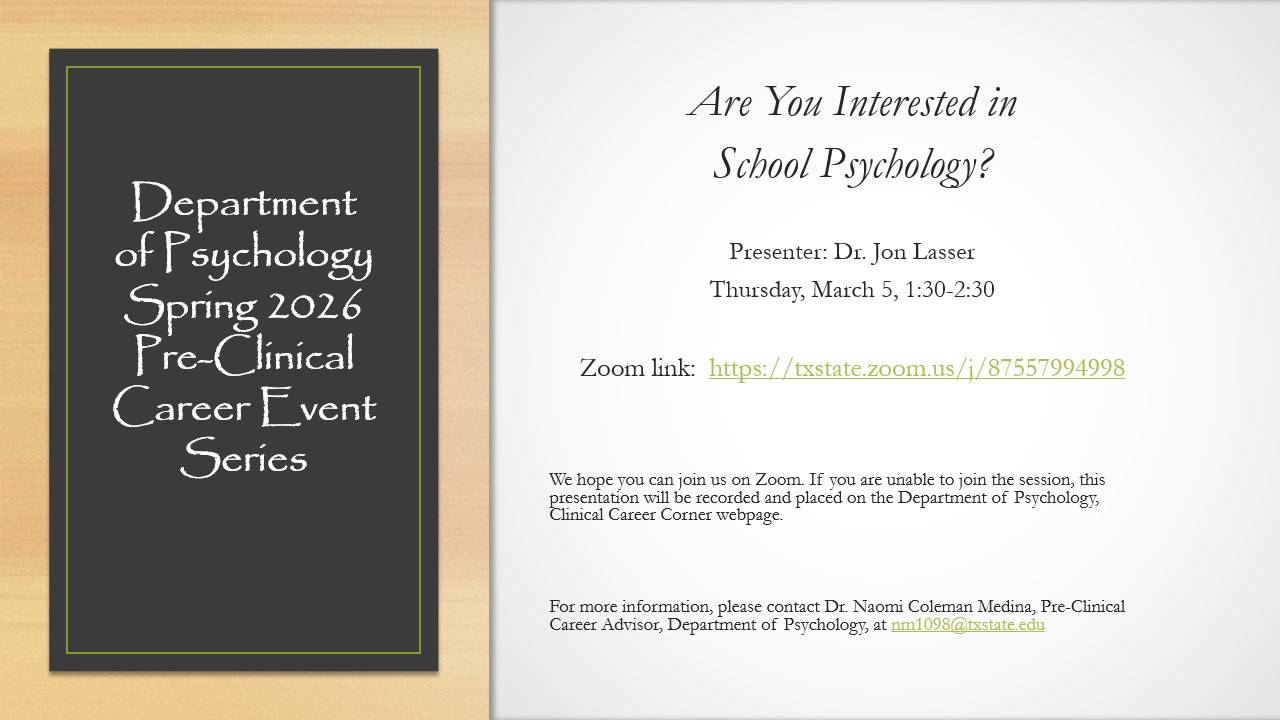
Thursday, March 5th, 1:30-2:30 interview with Dr. Jon Lasser
Dr. Jon Lasser is a University Distinguished Professor and Regents’ Professor in the School Psychology Program at Texas State University. He holds a master’s degree in Human Sexuality Education from the University of Pennsylvania, and a doctorate in School Psychology from the University of Texas at Austin. His books include Tech Generation: Raising Balanced Kids in a Hyper-Connected World (Oxford University Press), and a series of social-emotional learning books with the American Psychological Association’s Magination Press (Grow Happy, Grow Grateful, Grow Kind, & What Boys Do).
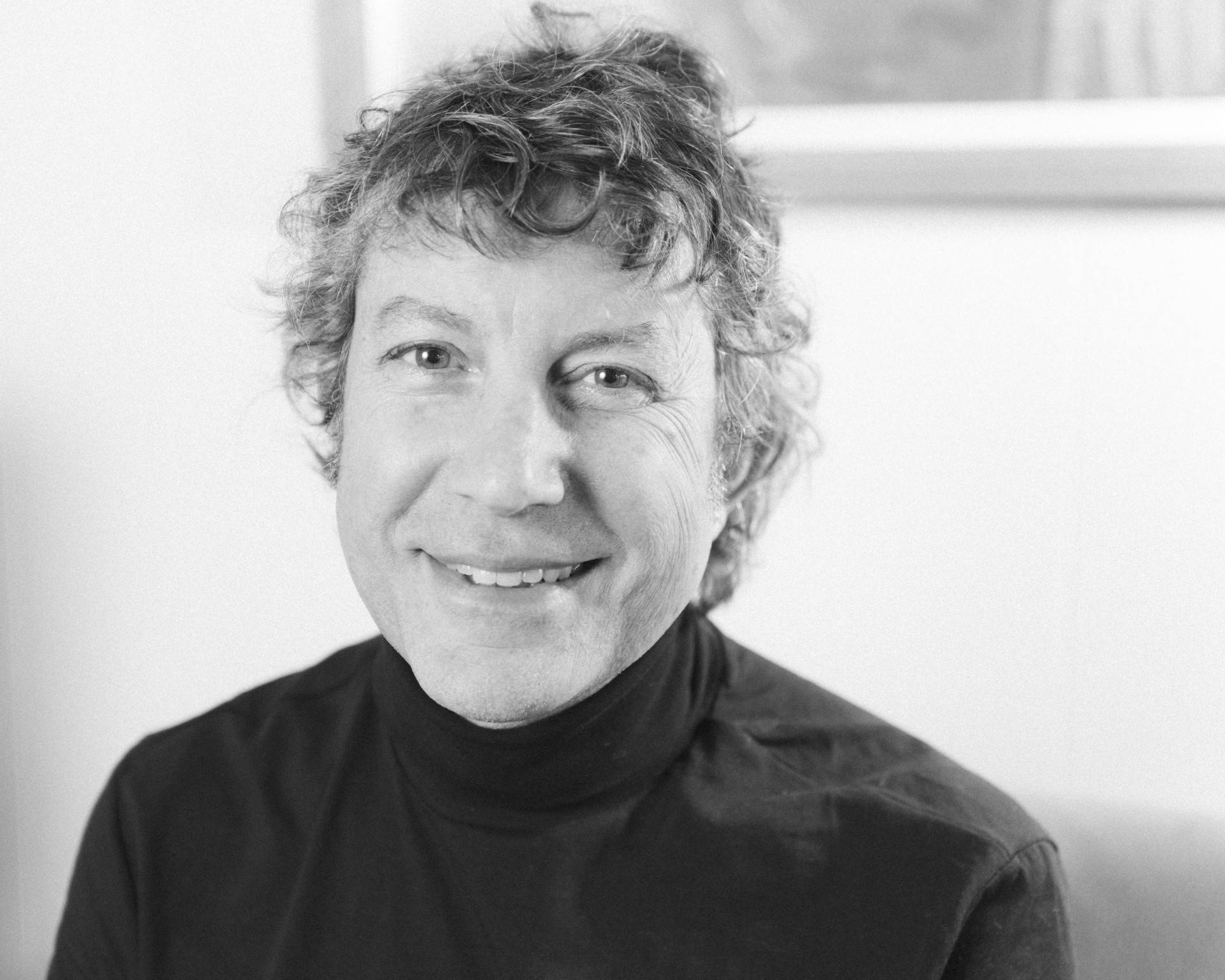
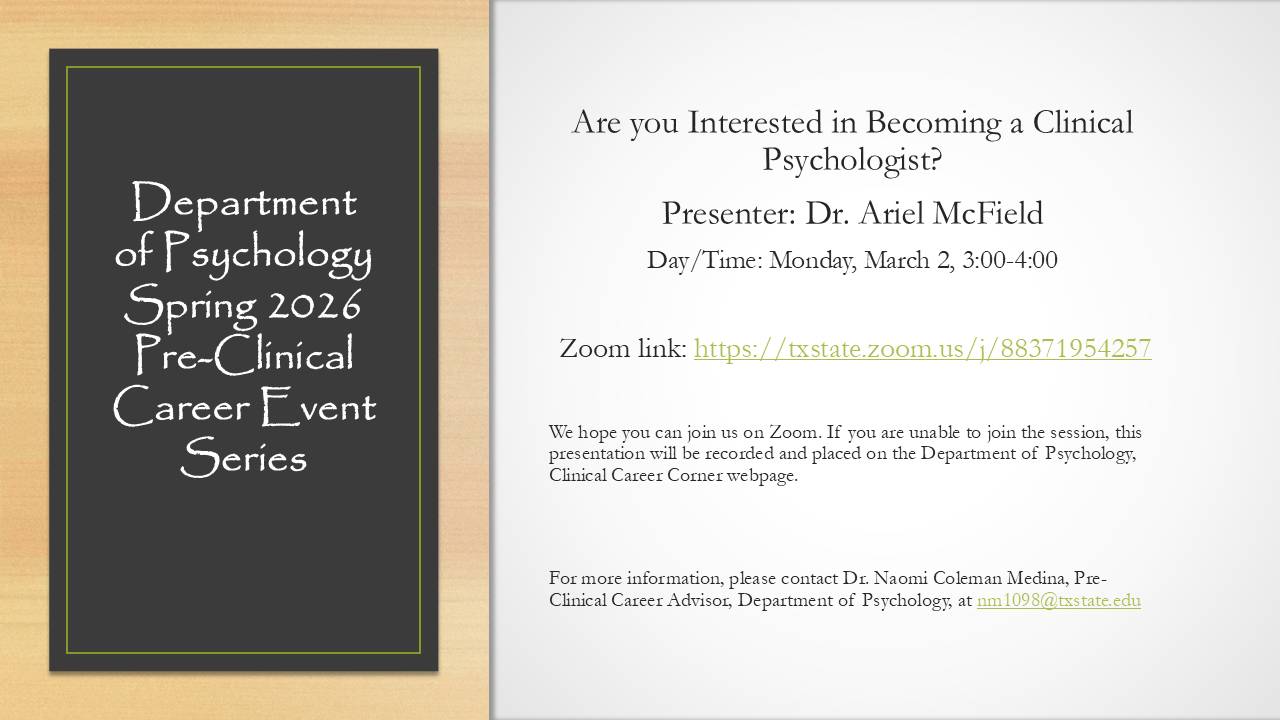
Monday, March 2nd, 3:00-4:00 interview with Dr. Ariel McField
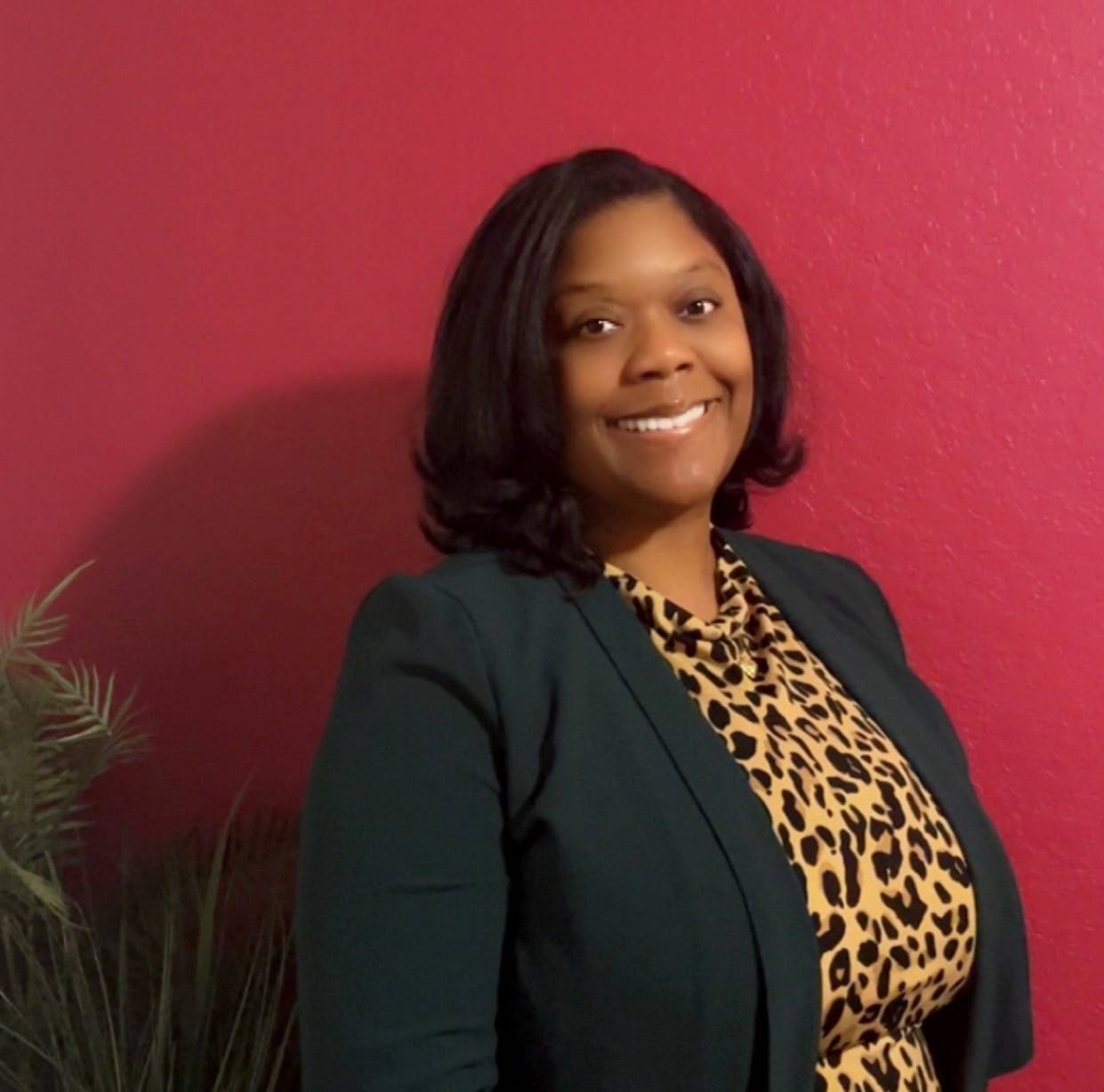
Dr. McField was born and raised in Pine Bluff, Arkansas. She completed a bachelor’s degree in psychology with a minor in Addiction Studies at the University of Central Arkansas. She later earned a master’s degree in Social Work from the University of Arkansas at Little Rock and a Ph.D. in Clinical Adolescent Psychology from Prairie View A&M University. Following her pre‑doctoral internship at the Boys Town Behavioral Health outpatient clinic, she began her academic career at the University of Texas Permian Basin. She served there as an Assistant Professor of Clinical Psychology for two years. She is now an Assistant Professor at Texas State University, where she teaches Cross-Cultural Psychology and Psychopathology.
Clinically, Dr. McField has worked with individuals spanning early childhood through late adulthood across a variety of settings, including outpatient clinics, counseling centers, and VA. Her clinical work primarily focuses on adolescents with a history of suicidal ideation and behaviors.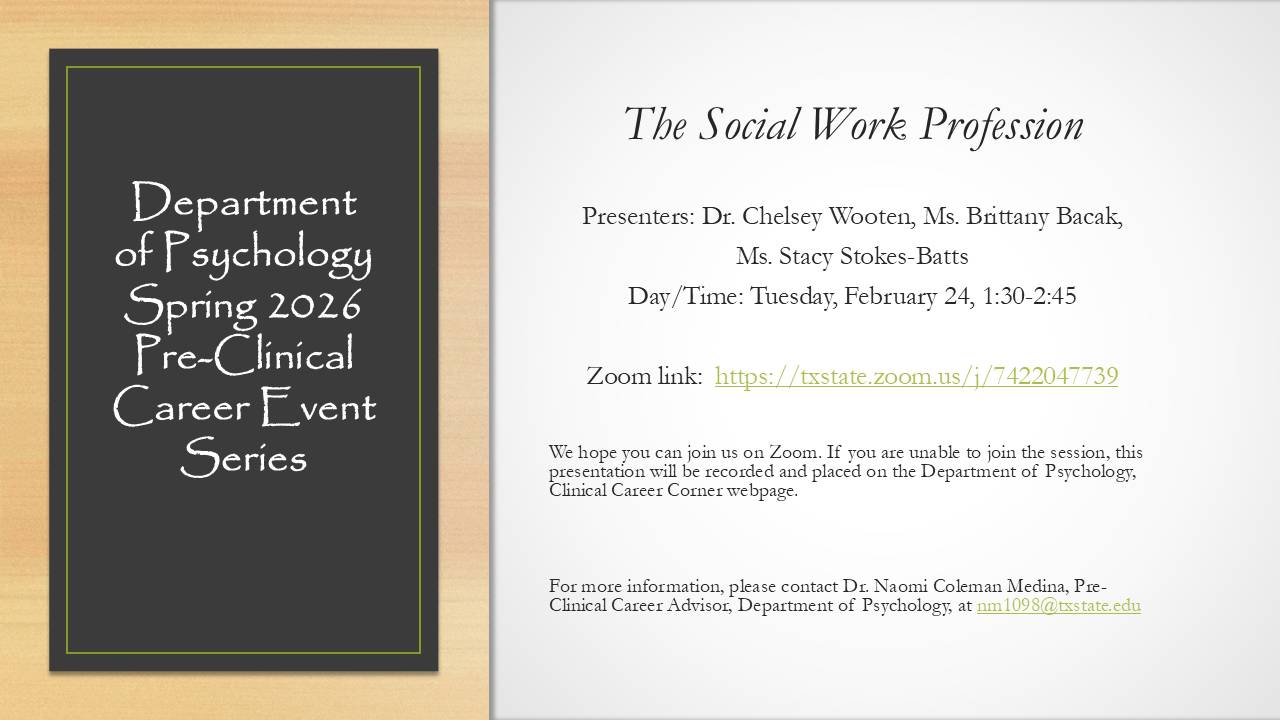
Tuesday, February 24, 1:30-2:45, Interview with Dr. Chelsey Wooten, Ms. Bacak, Ms. Stokes-Batts on Social Work
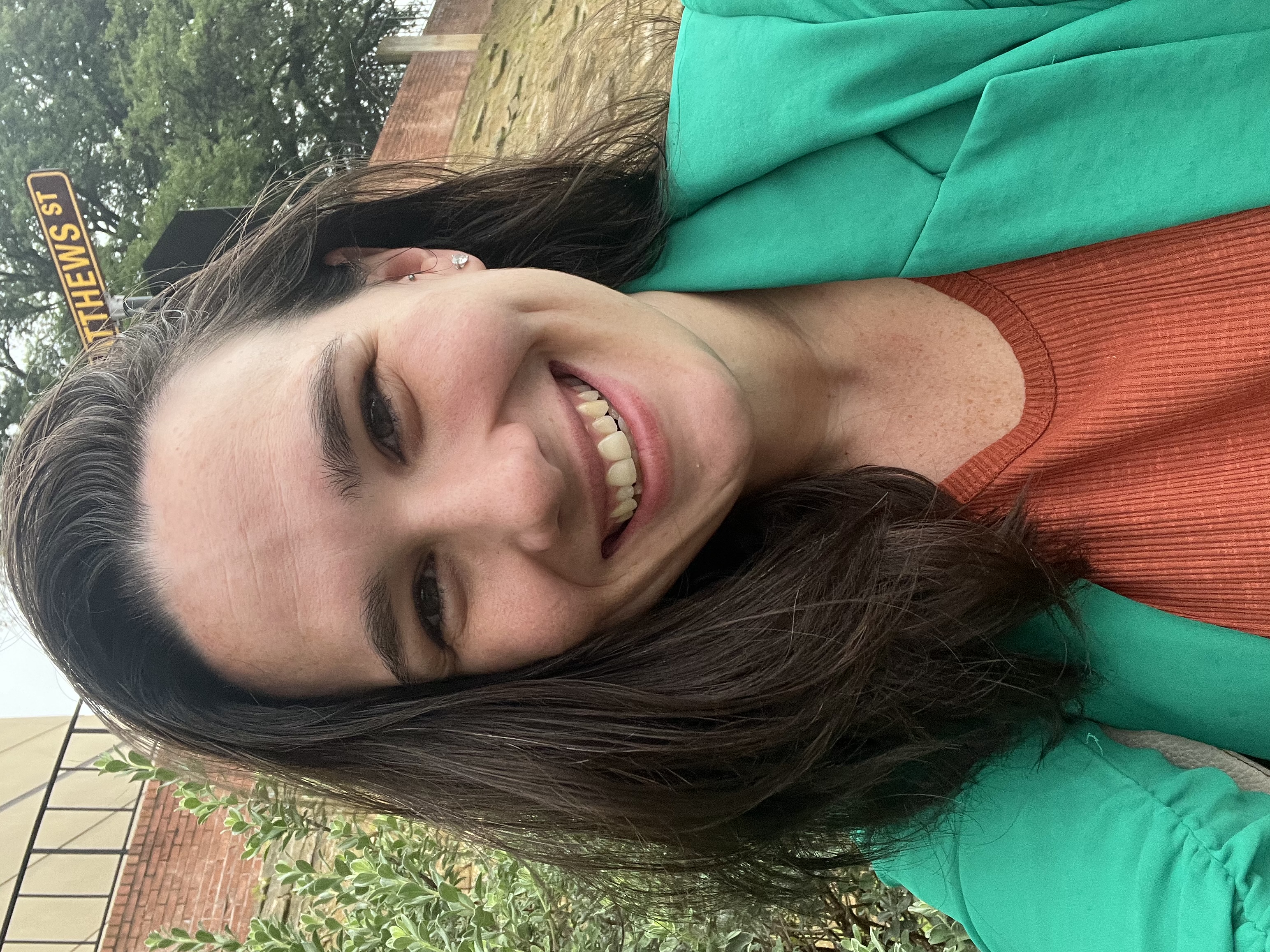
Ms. Brittany Bacak
Ms. Bacak is a Licensed Clinical Social Worker (LCSW). She received both her undergraduate and graduate degrees in Social Work from Texas State University. Her practice experience focuses in working within acute medical care settings with those undergoing mental health crisis or coping with a variety of psycho-social stressors including those related to financial or housing instability, substance abuse, neglect, physical and sexual assaults and/or abuse, and families of patients having undergone a trauma or critical life events. Ms. Bacak enjoys helping students apply social work theories and skills in practice settings.
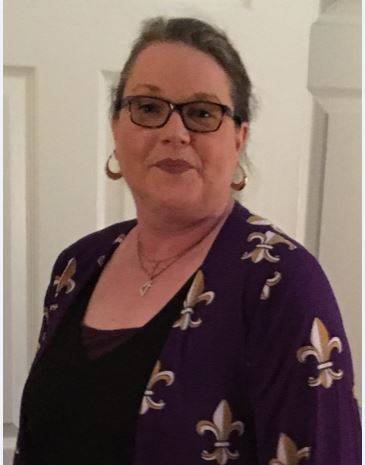
Ms. Stacy Stoke-Batts
BSW & MSW Lecturer, School of Social Work, Texas State University
Advisor, Phi Alpha National Social Work Honor Society – Alpha Chi Chapter, Texas State University
Advisor/Founder, The Echoes A Cappella Group, Texas State University
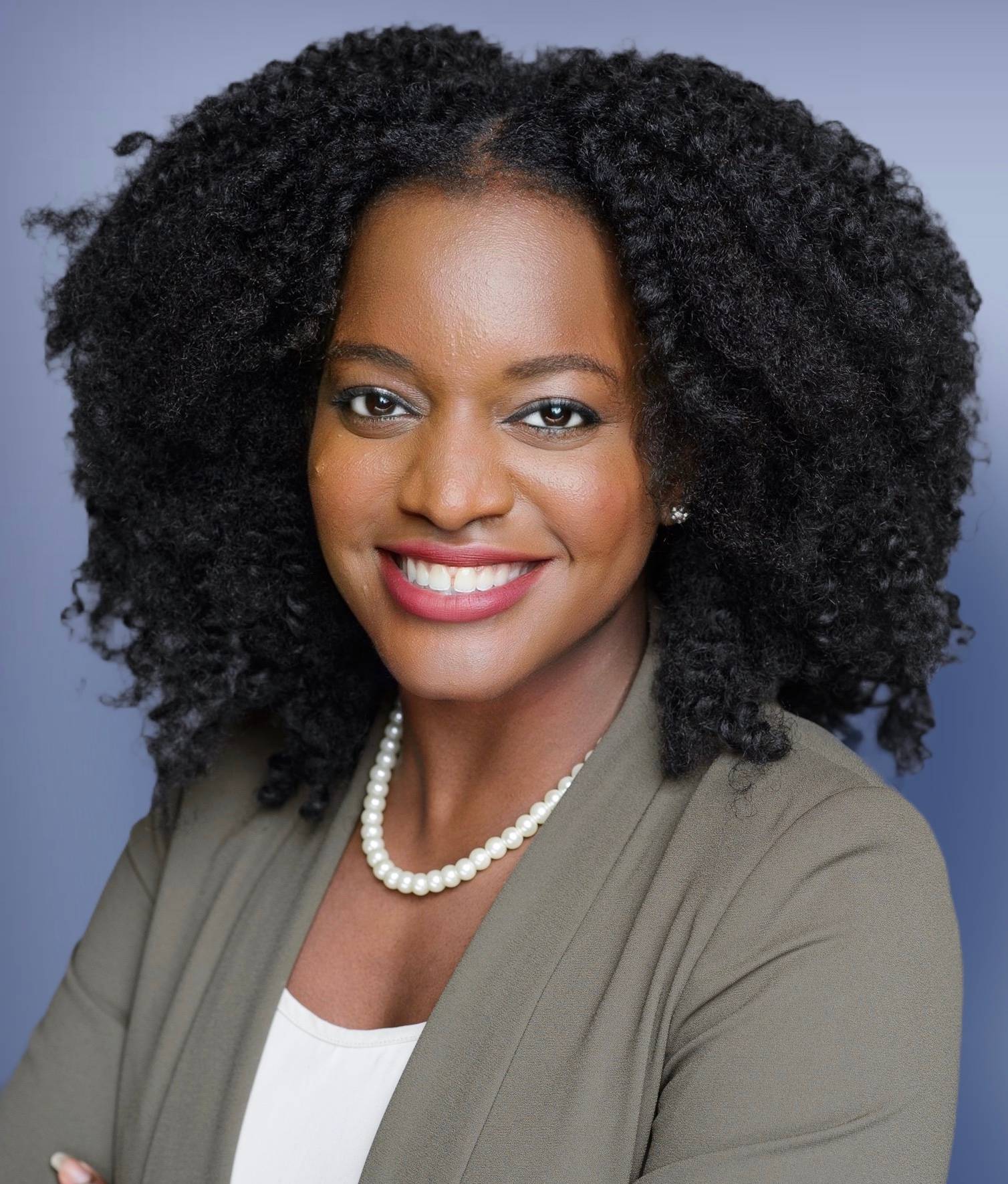
Chelsey Wooten, PhD, LPC
Dr. Wooten has been serving at Texas State University since 2021 as an Assistant Professor of Instruction and Master of Social Work (MSW) Program Director at Texas State University. She earned her Bachelor of Science in Psychology and Bachelor of the Arts in Sociology from Louisiana State University in Baton Rouge, LA, in 2014. She earned her Master of Arts degree in Counseling where she specialized in Forensic Psychology from Adler University located in Chicago, IL, in 2017. Dr. Wooten completed her Ph.D. in Social Work from Louisiana State University in December 2022 where she specialized in Child and Family Studies. Her clinical areas of interest include a decade’s worth of practice experience in mental health, advocacy, and crisis intervention arenas serving as a victim’s advocate, crisis intervention specialist, and clinical therapist. Dr. Wooten’s research interests include using mixed methodologies to examine the interactions between marginalized groups and institutional systems (e.g., criminal legal system, the military, law enforcement, academia); as well as the effectiveness of trauma-informed and culturally sensitive interventions that aim to address race-related issues, racial and social traumas, posttraumatic stress disorder, disparities within institutional, forensic, and military spaces. Additionally, Dr. Wooten examines the impact of adverse experiences on the mental health and well-being of individuals from a holistic perspective on a micro (individual and family) and macro (policy) level with an interest in the auxiliary areas of her work including immigration, religiosity, and law enforcement.
-
Fall 2025 Resources/Events
For more information, please contact:
Naomi Coleman Medina, PhD, LPC-S
Assistant Professor of Instruction, Pre-Clinical Career Advisor
nm1098@txstate.edu